
Clyfford Still, 1950 PH-272 , photo by Ben Blackwell (c) Clyfford Still Estate "You can turn the lights out. The paintings will carry their own fire,” said American Abstract-Expressionist Clyfford Still about his super-sized, flame-streaked canvases. It’s the artist’s fiery palette that’s the subject of a new show at Denver’s Clyfford Still Museum: Red/Yellow/Blue (and Black and White): Clyfford Still as Colorist from January 25 to May 12, 2013. Like much about this complex artist, the answers aren’t black and white. Over thirty of Still’s dramatic canvases are arranged in five sky-lit galleries, each devoted to one of his signature hues. Half the paintings have never been exhibited before -- part of a trove of some 800 works Still kept hidden for decades in a Maryland warehouse. The collection was finally revealed when the museum opened in 2011. For Still, black was a warm, generative color, rather than a symbol of death, and he often used it in large expanses. Though Read More
Museum of Fine Arts, Houston Strikes Oil(s)
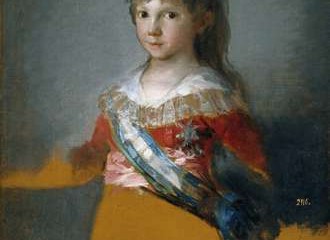
Francisco de Goya, The Infante Don Francisco de Paula Antonio, 1800, oil on canvas, Museo Nacional del Prado, Madrid. © Photographic Archive, Museo Nacional del Prado, Madrid For centuries, Spain’s monarchs avidly collected art, spending a king’s ransom to decorate their palaces and chapels with family portraits and monumental religious and mythological canvases. Their royal collections launched the Prado Museum in 1819. In a holiday gift for art lovers, 100 favorites have traveled to Houston forPortrait of Spain: Masterpieces from the Prado at the MFAH from December 16, 2012 to March 31, 2013. French writer Théophile Gautier described the Prado as "rather a museum of artists than a museum of art" and the Houston trove includes gems by giants Titian, Rubens, Velázquez, and Goya. “What surprised me most was that the Prado was willing to lend so many masterpieces to a single show,” says MFAH director Gary Tinterow. “Never before have so many works of first Read More
“Treasurer of the Art”: Paolo Veronese at the Ringling Museum

Rest on the Flight Into Egypt, Paolo Veronese, circa 1572 About the Venetian Renaissance artist Paolo Veronese, 17th century writer Marco Boschini raved: “He is the treasurer of the art and of the colors. This is not painting -- it is magic that casts a spell on people who see it produced.” Among those spellbound by Veronese’s theatrical canvases were American art collectors like Isabella Stewart Gardner, Henry Clay Frick, and circus impresario John Ringling. “Paolo Veronese: A Master and His Workshop in Renaissance Venice” unites 70 of Veronese’s finest works in North America at Ringling's Sarasota, Florida museum -- the first comprehensive U.S. survey of the artist in 25 years. The John & Mable Ringling Museum of Art organized the show with loans from many institutions, including the National Gallery of Art, Washington; National Gallery of Canada, Ottawa; Harvard Art Museums, and Cleveland Museum of Art. “It was easy for Americans to get excited about Veronese, Read More
Behold, America!

Mrs. Thomas Gage, John Singleton Copley, 1771, Timken Museum of Art “Behold, America! (and thou, ineffable guest and sister!) For thee come trooping up thy waters and thy lands; Behold! thy fields and farms, thy far-off woods and mountains, As in procession coming.” – Walt Whitman, 1871, “Song of the Exposition” Opening November 10, Behold, America! unites the best works from the American art collections of three San Diego museums: the Museum of Contemporary Art San Diego, the San Diego Museum of Art and the Timken Museum of Art. It’s a warm-up to the 100 year anniversary in 2015 of the Panama Exposition in Balboa Park, which first brought American artists of major importance to San Diego. Featuring 175 works, the ambitious show explores how American artists have reflected and helped contribute to our changing national identity over three centuries. The art works address a wide range of topics and issues -- from colonialism and racism to nature and environmentalism. Read More
Picturing the West

American Indian Beauty Pageant Winner, Oregon, 1997 William Albert Allard/National Geographic Stock “No matter how sophisticated you may be, a large granite mountain cannot be denied - it speaks in silence to the very core of your being.” – Ansel Adams The Buffalo Bill Historical Center in Cody, Wyoming, featured in A Love for the Beautiful, is among ten venues nationwide hosting “National Geographic Greatest Photographs of the American West” – a visual retrospective of images published by National Geographic over the past 125 years. From poignant portraits to spectacular national parks and wildlife, the 75 images present a powerful narrative about the American West. Organized thematically into four sections -- Legends, Encounters, Boundaries and Visions -- the show features historic works by early practitioners William Henry Jackson and Edward Curtis, along with modern and contemporary images by photographers like Ansel Adams, Annie Griffiths and Joel Read More
Homer’s Haunts

Winslow Homer Studio Piazza, photograph by Trent Bell “The picture is painted fifteen minutes after sunset – not one minute before... You can see that it took many days of careful observation to get this... with a high sea and tide just right.” -- Winslow Homer Of all his works, Winslow Homer is best remembered for a series of powerful “marines.” His inspiration? Prouts Neck, Maine, where he lived and worked for over a quarter of a century. Now Homer fans can visit his studio -- thanks to a major restoration by the Portland Museum of Art. “This studio is particularly relevant because Homer’s art was so transformed by moving into the studio in Maine,” says PMA director Mark Bessire. “Like Monet at Giverny, Homer at Prouts Neck, Maine became a different artist. And it was wonderful to acquire the studio directly from the Homer family as the very patina of the building reflects their caring legacy.” The Boston-born artist discovered coastal Maine when his Read More